





















Do you have questions?
Call or text today, we are here to help!
602-422-9870

That groan, sag, or slow lift may not be the heat. Seven signs your Arizona garage door is failing, and how to read them before it quits.
Part 1 of 3 in the series Desert-Proof Doors: The Arizona Repair-or-Replace Playbook.
Every Arizona homeowner has a version of the same story. The garage door starts making a noise it never made before. It hesitates halfway up. A panel looks a little wavy in the afternoon light. And the explanation writes itself: it's the heat. Everything out here bakes and warps by August. Why would the biggest moving part of your house be any different?
Heat is real, but it's the accelerant, not the cause. This three-part series was built with insights from On Track Garage Door Service, whose field experience across Valley homes shaped how we break down what's actually happening behind that panel. Part one is triage: how to read your own door like a technician would, sign by sign, before you spend a dollar. Some of what follows is a $150 afternoon. Some of it means your door is a system in decline, and every repair from here is rent, not ownership.
Walk it twice: once from the driveway in daylight, once from inside with the door closed and the lights on. The driveway shows you alignment and finish. The inside shows you hardware, springs, and track, which is where the expensive truth usually lives. Pull the emergency release cord, lift the door by hand about three feet, and let go gently. A healthy door stays roughly where you put it. If it slams down or shoots up, your springs are out of balance, and that one test tells you more than an hour of guessing.
Doors fail out loud before they fail completely. Here are the first four signs, and what each usually means once you stop blaming July.
Rollers and hinges dry out fast here. Monsoon dust settles into the bearings, mixes with old grease, and turns into a grinding paste. A screech that lubrication fixes is maintenance. A screech that returns within weeks means the rollers are worn past their bearings, and worn rollers chew up track.
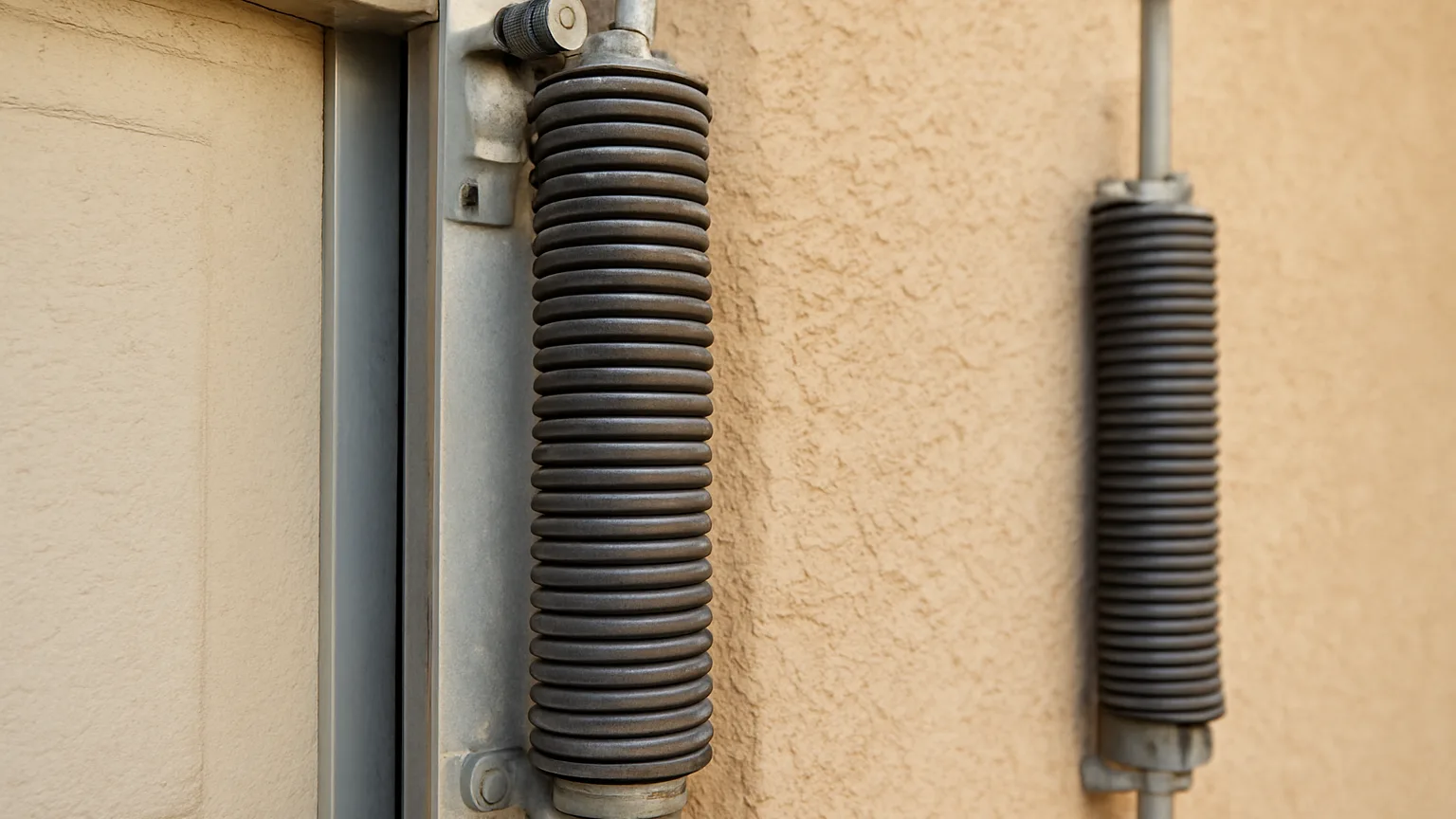
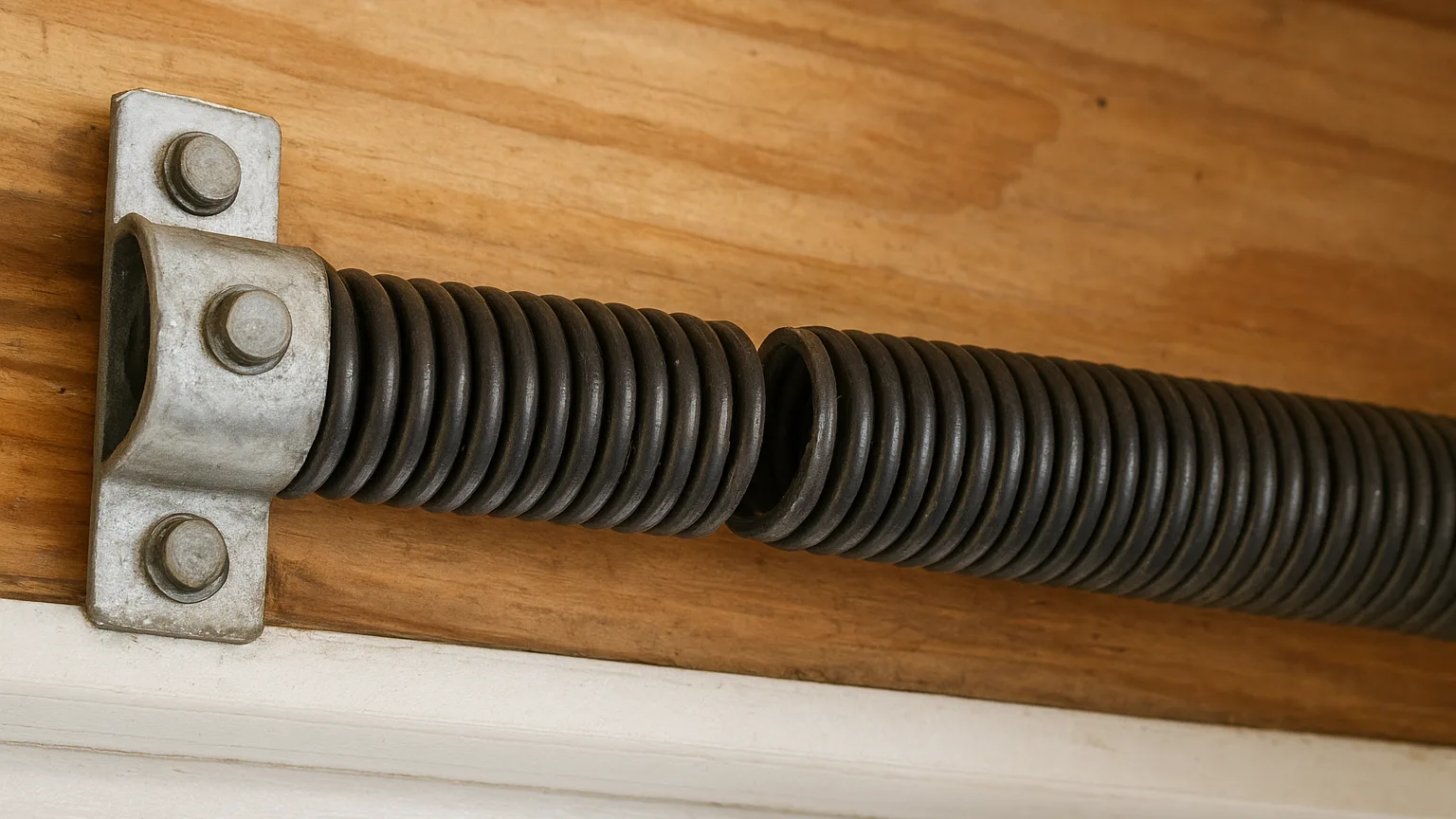
This one is not the heat. A sharp crack from the garage, often when nobody is using the door, is almost always a torsion spring breaking. Look at the spring above the door: if you see a clean gap in the coil, stop using the opener. Running a door on a broken spring is how you kill the opener too.
Sometimes it's the opener straining. More often the door has gotten heavier because springs have lost tension, or the track is slightly bent and creating drag. Either way, something is doing work it wasn't designed to do.
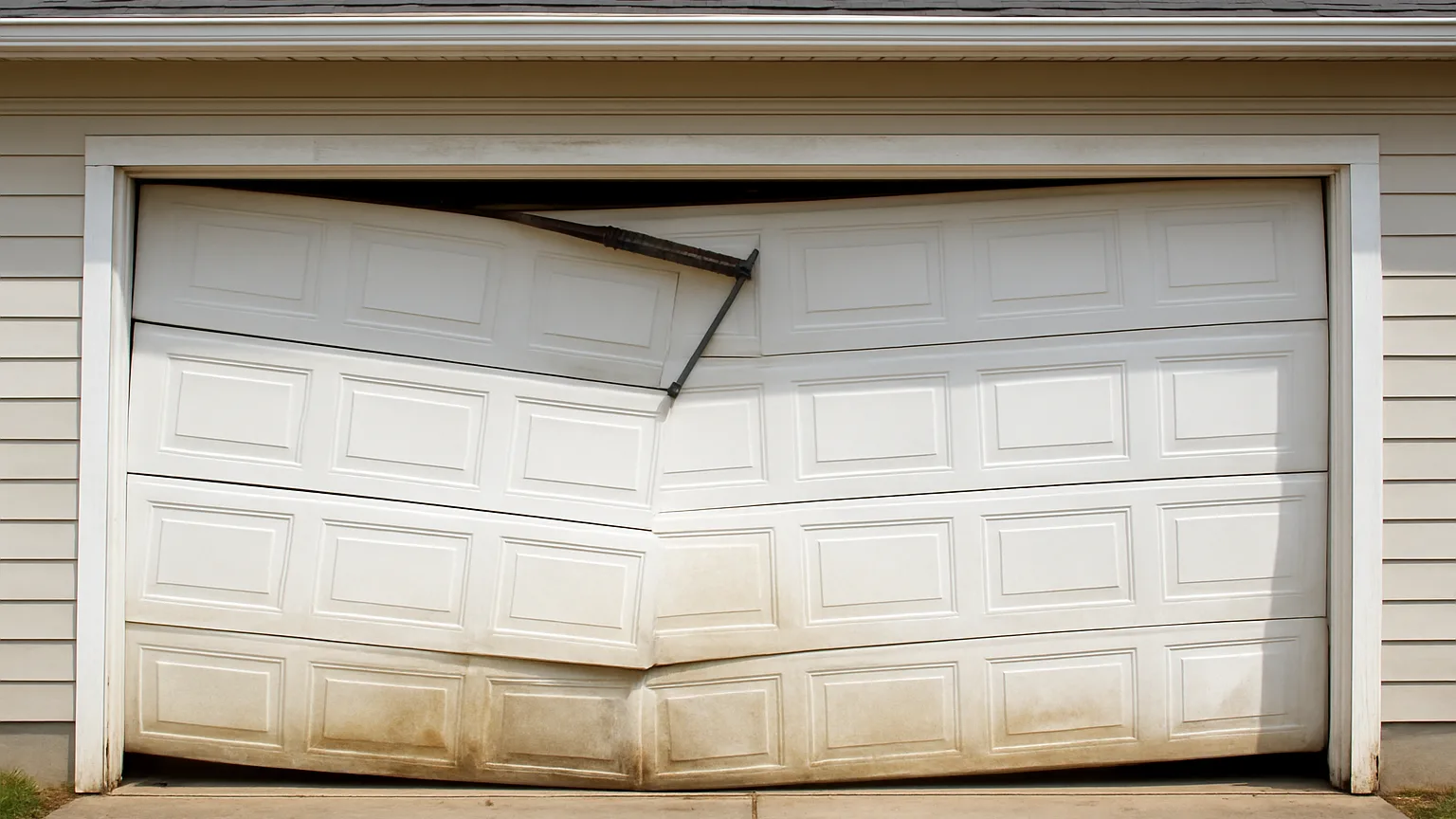
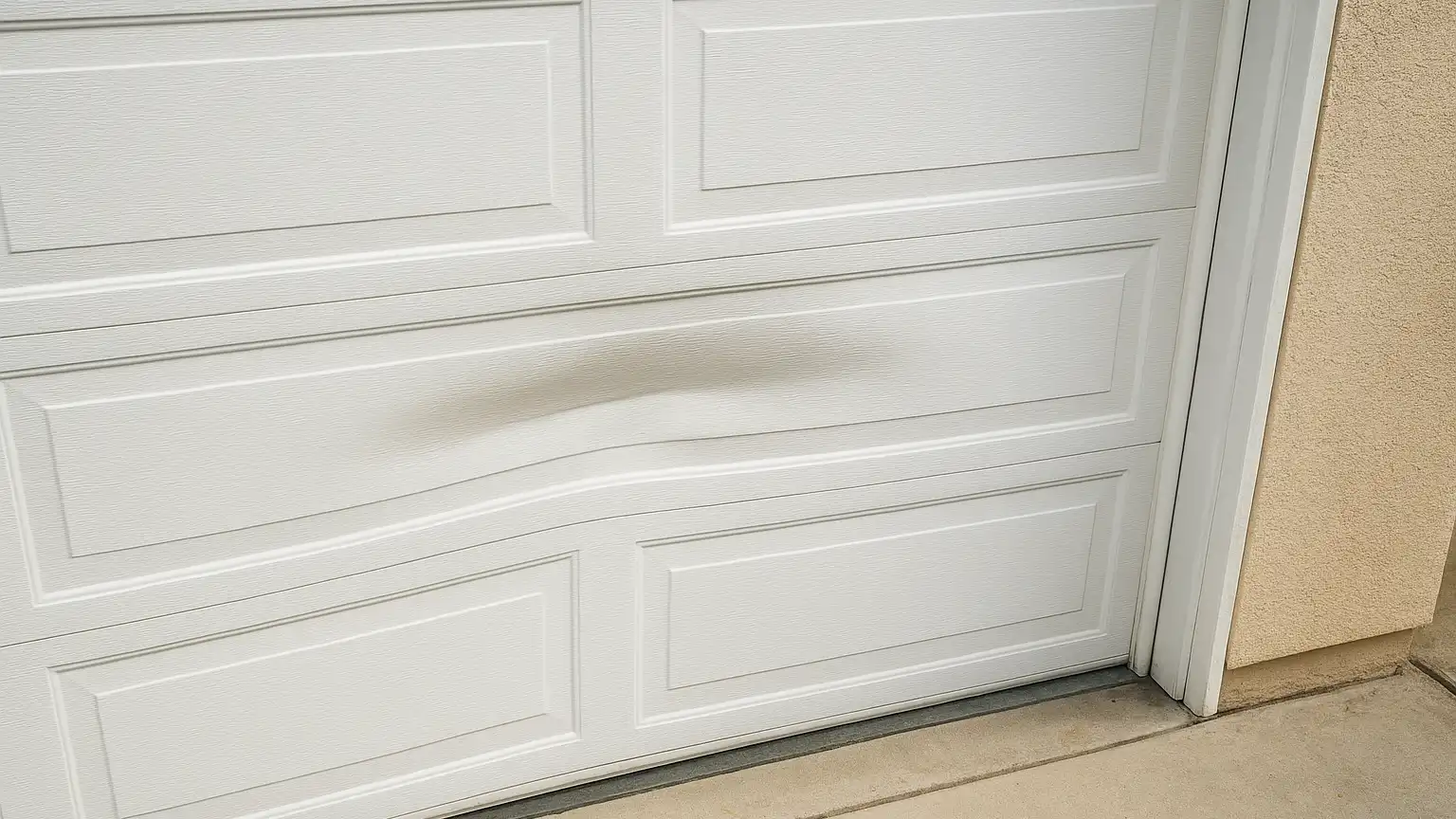
From the driveway, look at the top panel against the header line. A wave or dip means the panel has lost structural integrity, usually from repeated heat cycling on a thin, non-insulated steel skin. Sagging panels don't recover. They spread stress to the hinges on either side, and a one-panel problem becomes a three-panel problem.
Two of these together, particularly a sag paired with slow lift, are where homeowners start asking whether repair still makes financial sense, which is exactly where the the cheap repair is usually question gets interesting.
The next three signs are quieter, which is why they get ignored longest. They're also the ones most tied to our climate.
Arizona sun is brutal on finishes, especially west- and south-facing doors taking direct afternoon exposure. Fading alone is cosmetic. Cracks that expose bare metal or splitting composite are not. Once monsoon humidity gets under the finish, corrosion works from the inside out, and no amount of repainting stops it.
Close the door and look for light. Gaps mean the weather seal is done, the door is out of square, or the floor has shifted. Beyond the dust, scorpions, and heat pouring in, gaps are a symptom: the door no longer sits square in its opening, and that misalignment wears rollers and cables unevenly.
Watch the bottom edge hit the concrete. If one corner lands first, the cables are unwinding at different rates or a drum has slipped. This is the most urgent sign on the list. Uneven cable tension is what sends doors off track entirely, usually when the door is halfway open with a car underneath.
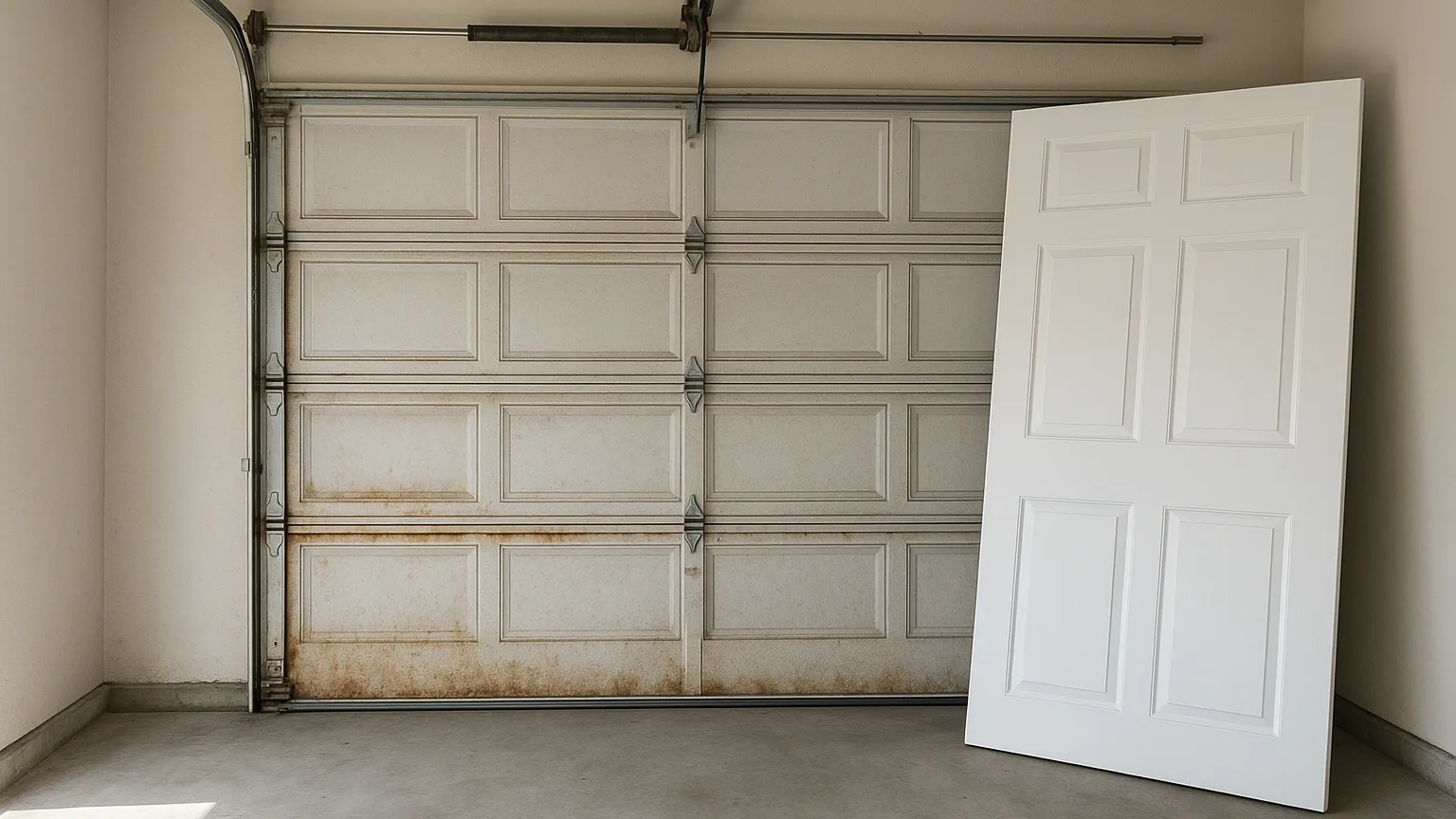
Press your palm flat against the inside of the door on a 110-degree afternoon. If it's too hot to hold, you have effectively no thermal barrier. Homeowners looking at glass-panel or patio garage doors for a renovation often find insulation matters more than aesthetics, because an uninsulated door turns your garage into an oven and pushes heat into adjoining rooms.
Count your signs. One item from the small-problem list is genuinely a service call and a modest bill. Take the good outcome.
Three or more, or any single item from the system list, means the door is aging as a unit. A tired spring loads the opener. A sagging panel stresses the hinges. Misalignment grinds the rollers. Technicians consistently see the pattern the team at On Track describes: the second and third repairs arrive faster than the first, because each fix is now supporting parts that are also near the end of their service life.
Before any technician arrives, jot down four things. It changes the conversation completely.
That last point matters. A fifteen-year-old door with a two-year-old opener is a different decision than a matched pair installed with the house. Timing counts too, since scheduling gets tighter and pricing less friendly once case for deciding before monsoon and the whole neighborhood needs help at once.
None of these seven signs are mysterious once you know where to look. The groan is dry hardware or dying rollers. The bang is a spring. The sag is a panel that lost its spine to a decade of heat cycling. The daylight gap and the uneven close are the door telling you it no longer sits square in its own opening. Heat didn't invent any of these failures. It sped them up and gave homeowners a convenient excuse to wait another summer.
So you have your inventory: a count, a list, and a rough sense of whether you're holding a repair or a replacement. What you don't have yet is the math. The honest question isn't whether a spring can be swapped or a panel patched. It's whether that patch buys you five years or eight months in a climate that punishes shortcuts. That's where we go next: a straight cost comparison of patching springs, panels, and openers against replacing the whole system, and why the cheapest quote in the desert so often turns out to be the most expensive decision you'll make.
Call or text today, we are here to help!
602-422-9870