


















Do you have questions?
Call or text today, we are here to help!
602-422-9870

Arizona heat, UV and monsoon dust turn cheap garage door fixes into repeat bills. Real cost math on springs, panels, openers and full replacement.
Part 2 of 3 in the series Desert-Proof Doors: The Arizona Repair-or-Replace Playbook.
Part one walked you through the sounds, sags and slow openings Arizona homeowners tend to blame on the weather. If two or three of those signs showed up on your own door, the next question is the one that costs money: patch it, or replace it?
This series was shaped by the field experience of On Track Garage Door Service, whose technicians spend their days on Valley driveways watching what heat, sun and dust do to hardware. Their perspective is blunt: in this climate, the cheapest invoice today is rarely the cheapest number over five years.
A garage door in Phoenix, Gilbert or Surprise sits behind a wall of west-facing sun where surface temperatures climb well past 150 degrees. That heat thins the lubricant until metal grinds on metal, warps materials — thin steel skins oil-can, vinyl trim shrinks, adhesives on insulated panels let go — and cooks opener boards, capacitors and safety sensors in an attic-like space with no ventilation.
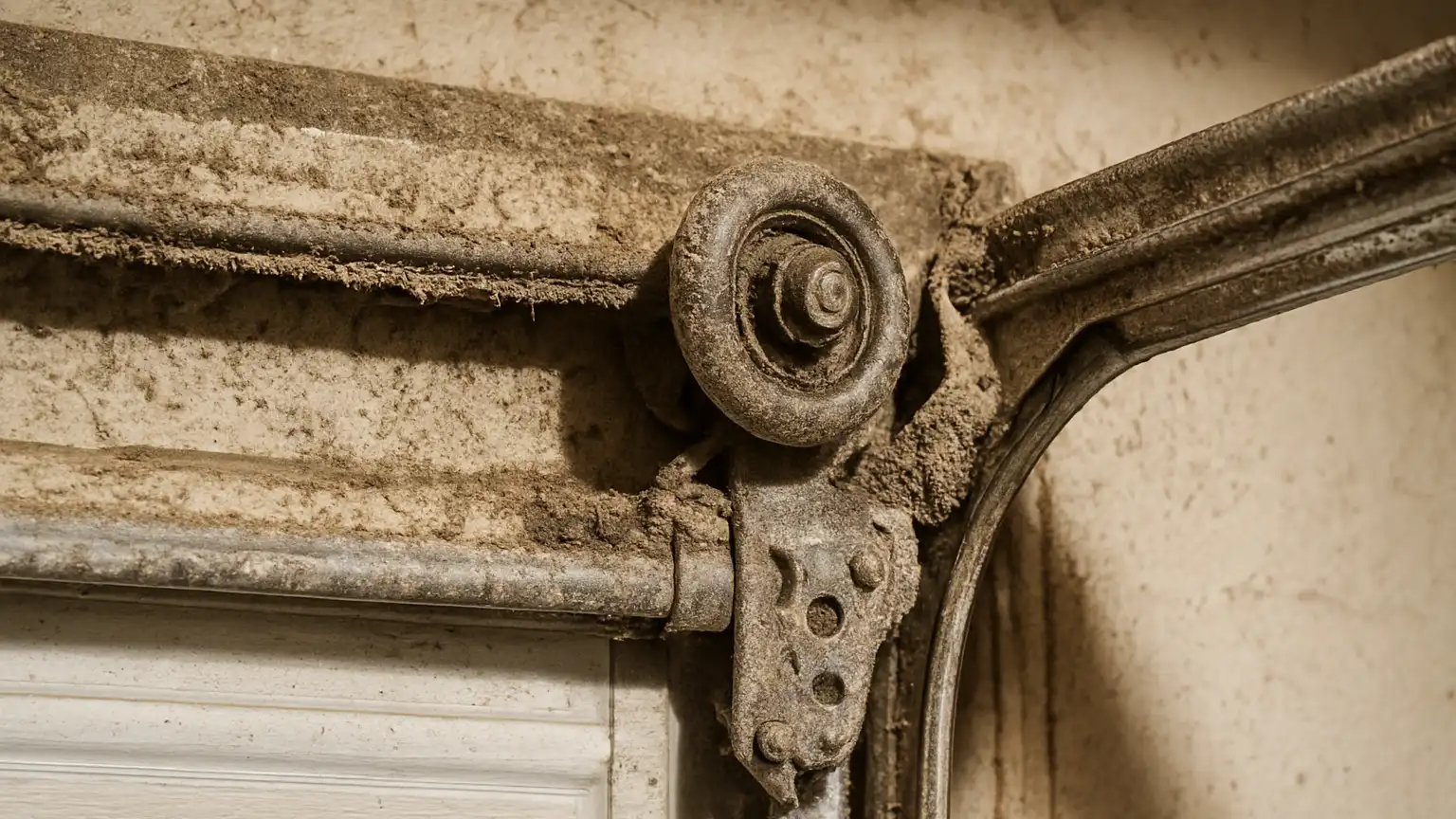
Then monsoon season drives fine caliche dust into every moving joint, and dust plus what is left of your lubricant makes a grinding paste. That paste is why an Arizona roller lasts a fraction of the time the manufacturer's chart promises, and why the same "small" repair keeps showing up on your credit card statement.
The ranges below reflect typical Valley pricing for a standard two-car sectional door.
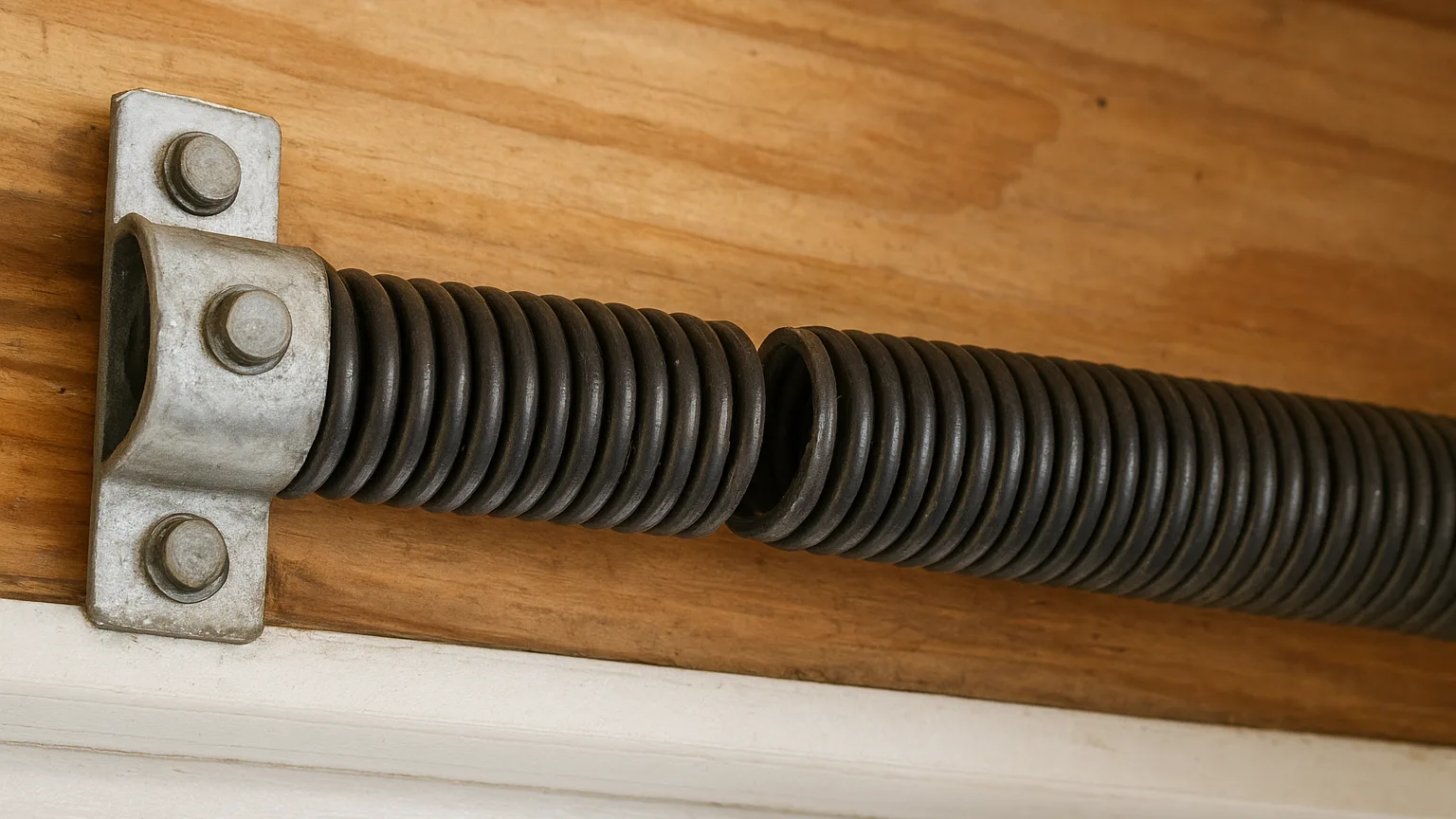
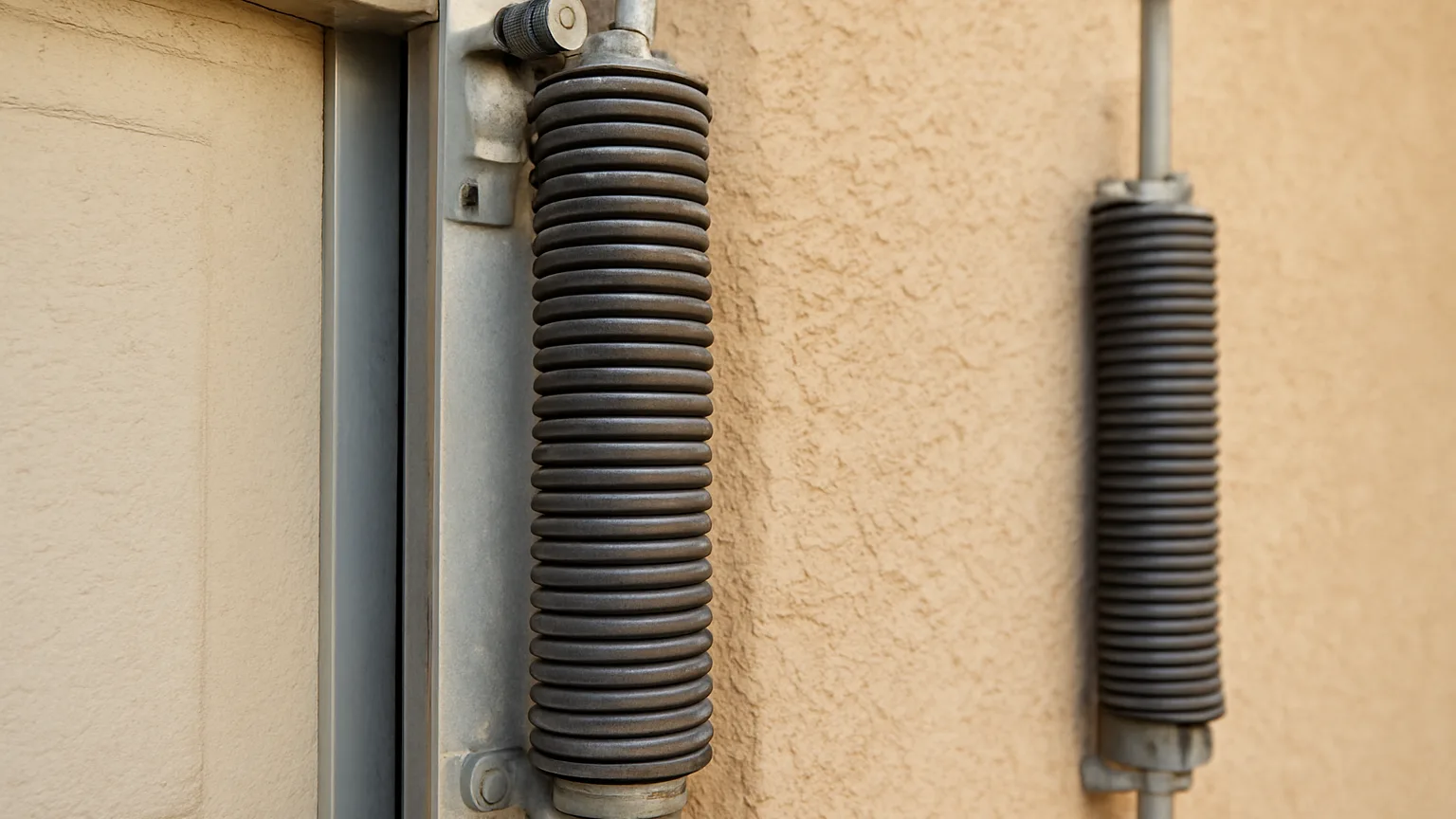
A single spring replacement runs roughly $200 to $350. Here is the trap: when one spring breaks, the other is the same age with the same cycles on it. Swap only the broken one and you are budgeting a second service call, plus a second trip charge, usually within a year or two. Replacing both costs more up front but resets the whole system to the same cycle life.
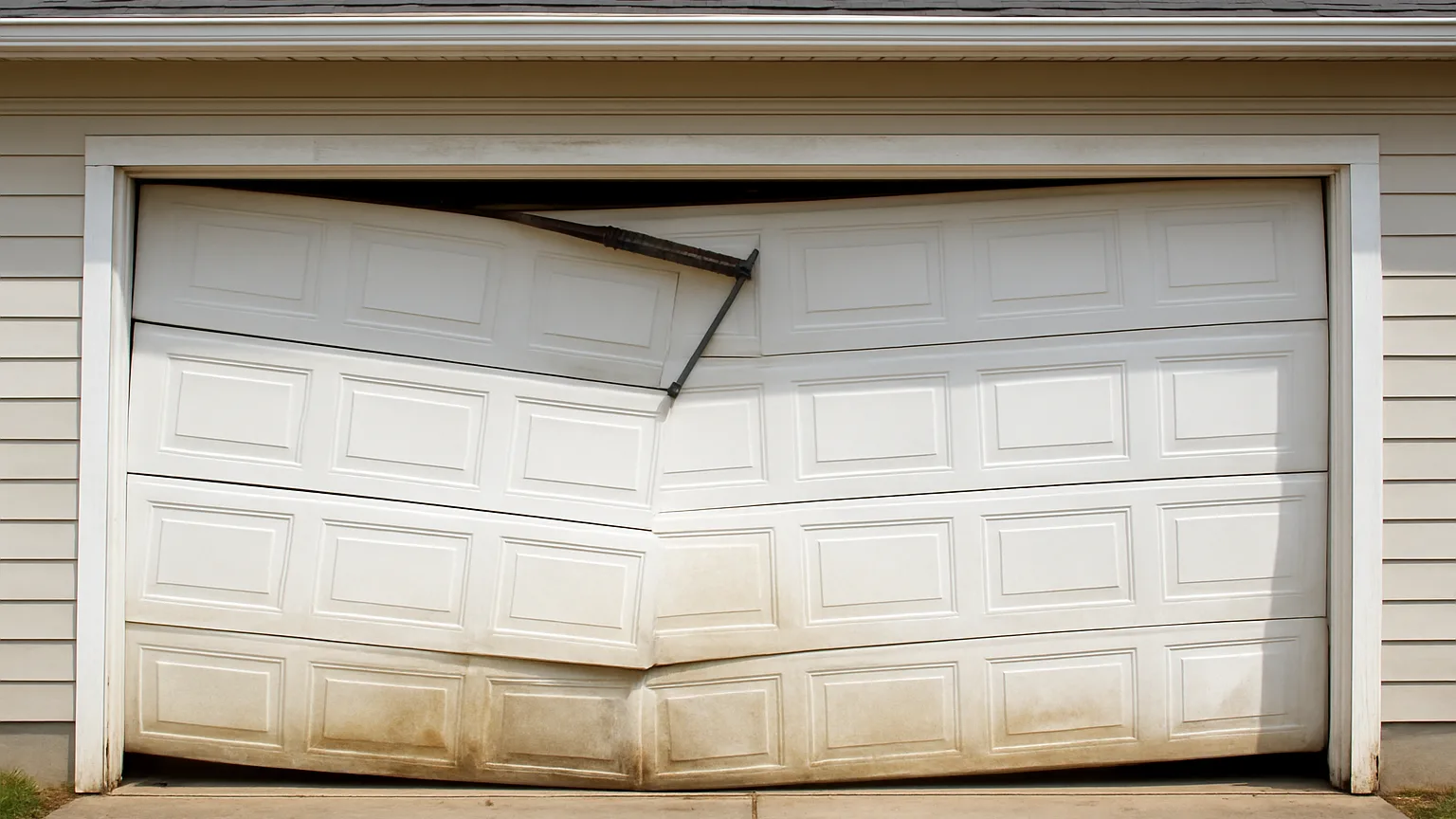
One panel typically lands between $350 and $800 installed, and that is the best case. Past eight or ten years old, your exact panel may be discontinued. What arrives is close, not identical, and it will not match sun-faded neighbors. On a stucco-and-tile street, a mismatched section reads as neglect from the curb.
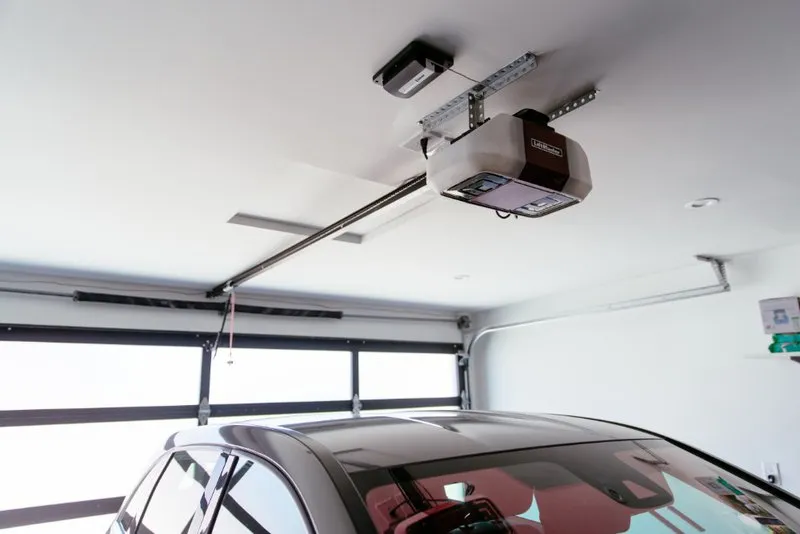
A logic board or capacitor repair sits around $150 to $300; a full replacement with belt drive and battery backup runs $450 to $750 installed. Repairing a fifteen-year-old chain drive means spending real money to extend something with no rolling code security, no battery backup during a monsoon outage, and parts availability that worsens every year.
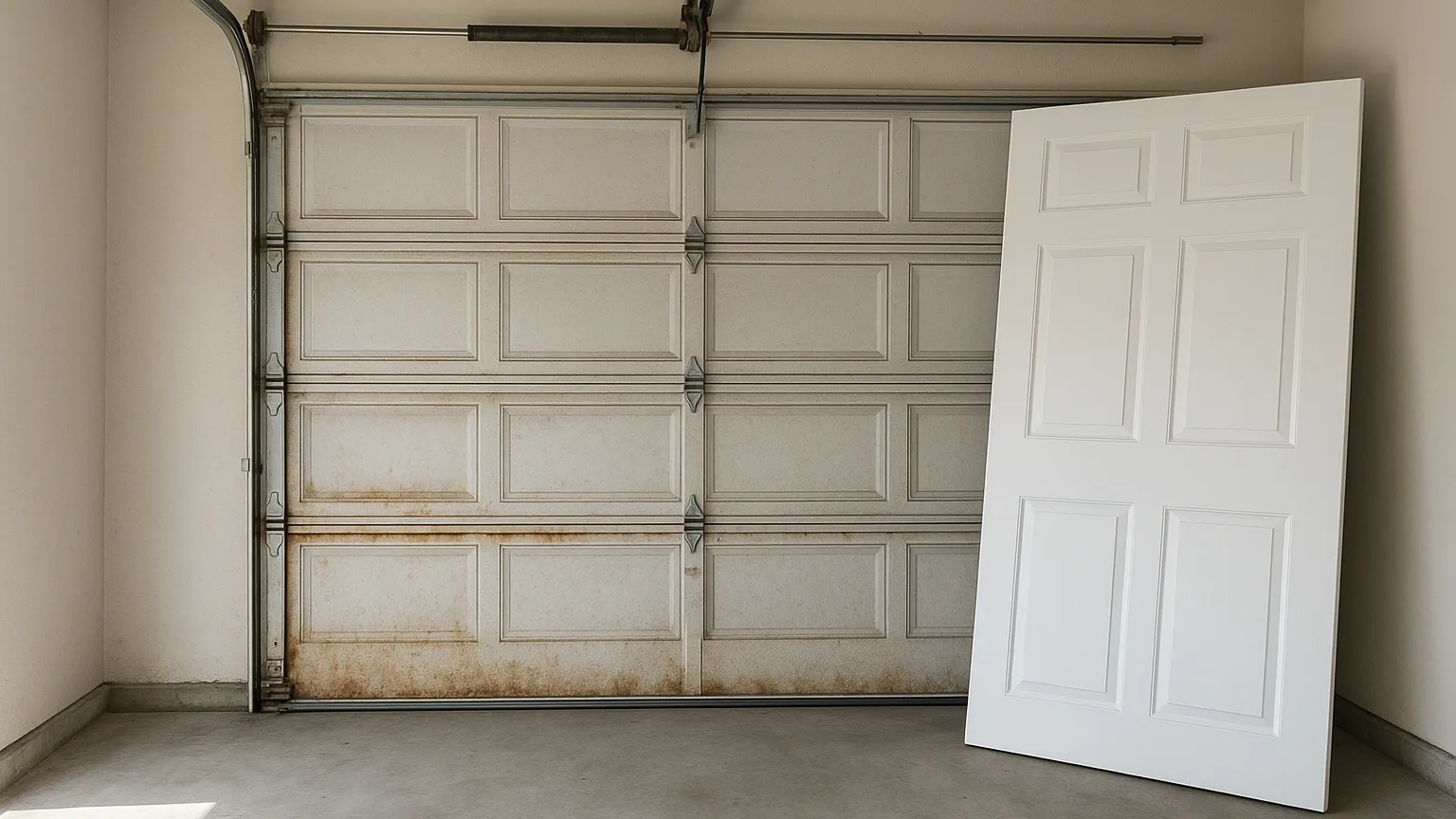
An insulated steel double door with new tracks, springs, rollers and hardware generally runs $2,200 to $4,500 depending on insulation value, windows and finish. That looks big next to a $250 spring — until you stack up four or five patches, four trip charges, and two mornings spent waiting on a technician instead of getting to work.
Picture a fourteen-year-old builder-grade door in Chandler. Year one, a spring snaps: $275. Year two, the other spring plus four shot rollers: $390. Year three, a dented, UV-delaminating bottom panel: $600. Year four, the opener board fries in July: $240. Year five, the door is louder than ever, still uninsulated, still worth nothing at resale. Total spent: about $1,505, for a door worse than when you started.
That same money toward a new insulated door buys a fresh warranty, quiet nylon rollers, a sealed bottom that keeps dust and scorpions out, a cooler garage in August — and one appointment instead of five.
"People ask us to fix the cheapest thing on the door, and sometimes that is genuinely the right call," says Marcos Villareal, service manager at On Track Garage Door. "But when the tracks are twisted, the panels are chalking from sun, and the opener is straining, you are paying to prop up a system that has already told you it is done."
The invoice is only part of the cost. An uninsulated or poorly sealed door quietly charges you every month. Garages that hit 130 degrees push heat straight through shared walls into bedrooms and hallways, and your air conditioner works overtime against it. Homeowners who upgrade from bare steel to a polyurethane-insulated door often see interior garage temperatures drop fifteen to twenty-five degrees, which shows up on the utility bill.
There is a safety cost too. A door held together by mismatched parts puts uneven load on cables and drums. That is how a cable jumps a drum with a car parked underneath. Many of the symptoms covered in garage door warning signs arizona are early versions of exactly that failure: small ignored noise, then a sudden drop.
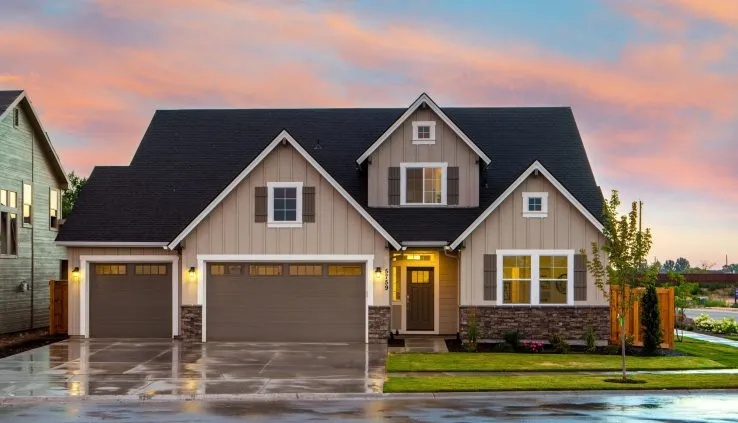
And then resale. A dated, sun-bleached door with a patched panel is the first thing a buyer sees in the listing photo. Appraisers and agents across the Valley consistently treat garage door replacement as one of the highest-return exterior upgrades, often recovering most of its cost. A repair returns nothing on paper.
Heat breaks down the grease, sun chalks the finish, dust grinds the bearings, and every one of those forces keeps working while you decide. Add up what you have spent in the last two years, look hard at the panels and tracks, and ask whether you are fixing a healthy door or subsidizing a dying one. If the answer points toward replacement, timing is the next lever, because what you pay depends heavily on whether you call in February or during the first week of an August storm. That gap between a planned project and an emergency one is where the last piece of this series picks up: service premiums, contractor backlogs, HOA approvals, and how to pick a door and an installer built for this climate.
Call or text today, we are here to help!
602-422-9870