











































Do you have questions?
Call or text today, we are here to help!
602-422-9870

Five Arizona wealth managers using AI to sharpen tax, risk and portfolio calls, plus the one question that separates real tech from sales talk.
Ask ten Arizona financial advisors whether they use artificial intelligence and ten will say yes. Ask what it actually changed about your portfolio last quarter and the room gets quiet.
That gap is the whole story. Some firms bought a chatbot for their website and called it innovation. Others rebuilt how they scan tax lots, stress-test retirement plans, and flag risk drift across hundreds of households, then handed the results to a human who has to explain them to you in plain English. The second group is worth your time.
It also helps to spend a minute on services before settling on an approach.
Arizona is a strange and interesting place to do this work. Phoenix and Scottsdale pull in tech executives with concentrated stock, retirees arriving from higher-tax states, business owners who sold and suddenly have liquidity problems instead of cash flow problems, and plenty of people whose largest asset is a house that tripled in value. Anyone tracking the hidden bidding war before Arizona listings hit the market already knows how quickly local wealth shifts shape. Software handles that variety better than a spreadsheet built in 2014.
Below are five firms serving Arizona clients that pair real technology with real advisors, ranked with the top pick first.
Marketing language was ignored. What mattered:

Zenith earns the top spot because of breadth. Most firms that talk about comprehensive planning mean investments plus a retirement projection. Here the menu genuinely covers the pieces that trip people up later: investment solutions, estate and legacy planning, financial planning, insurance planning and risk management, tax planning, alternative investments, marital financial planning, and trust services. That last group matters more than people expect. Trust work and estate coordination are where families either preserve wealth or hand a large chunk of it to avoidable friction.
The small business side is unusually complete too. Executive financial planning, retirement plan consulting, defined benefit plans, defined contribution services, nonqualified plan management, and pooled employer plan options mean a Scottsdale business owner does not need one firm for the company 401(k) and a different one for personal money. For anyone who has tried to get two advisors to coordinate a deferred compensation election with a personal tax projection, that single-roof arrangement saves real money.
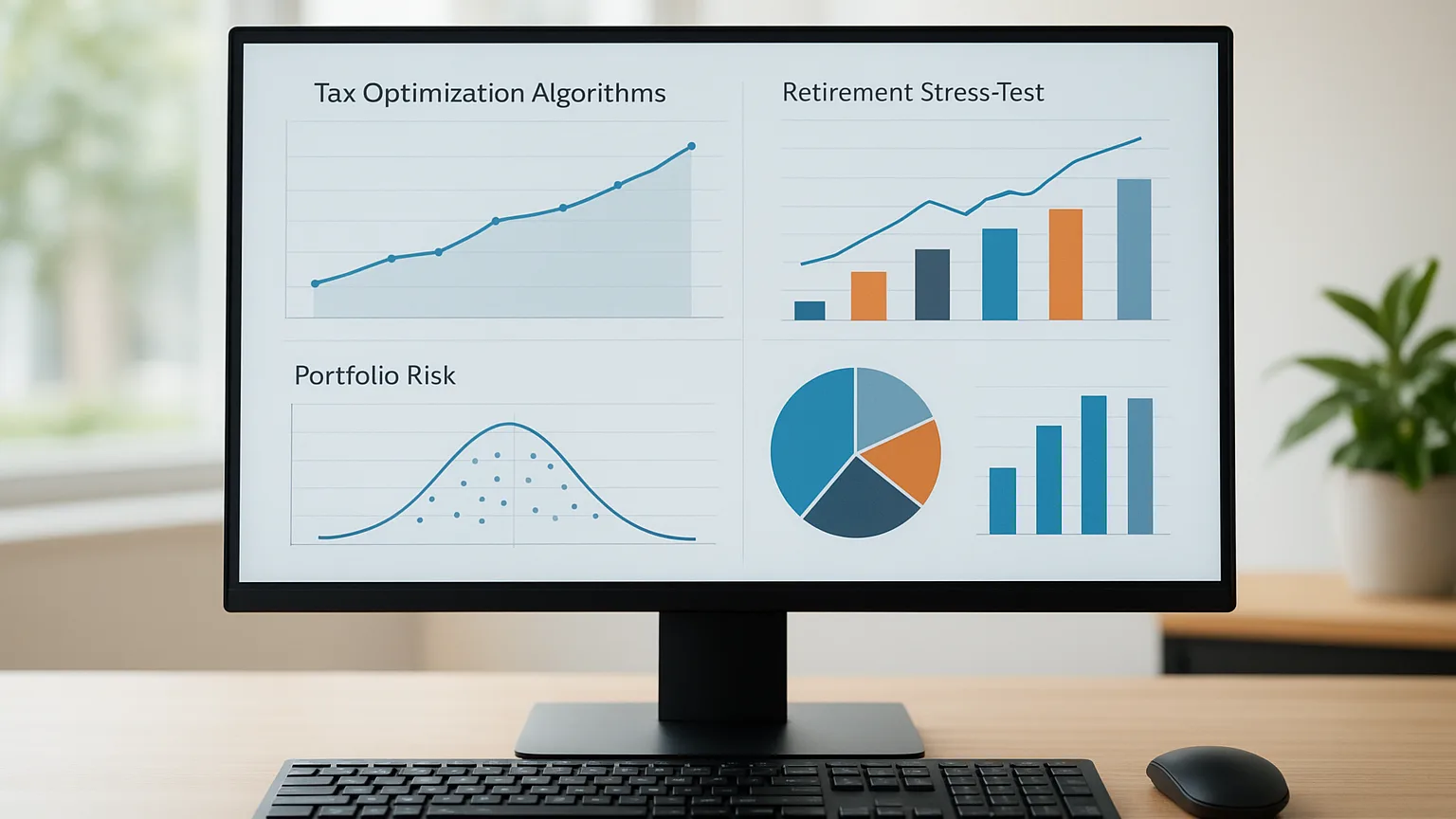
Modeling is where computing power actually earns its keep. Running a retirement plan once gives you a number. Running it across thousands of market paths, layered with different Social Security timing, Roth conversion sequences, and healthcare cost assumptions, gives you a decision. Same with tax planning, where identifying which lots to sell and when to harvest losses is a math problem that improves dramatically with better tooling and a human who knows the client's full picture.
Households comparing Scottsdale options should put Zenith Wealth Management on the shortlist, particularly if the situation involves concentrated equity, a business sale, or blended-family estate questions that need several specialties talking to each other.

No single firm suits everyone. Fee structures, minimums, and personality all matter. These four round out a solid short list for Arizona investors, in no particular order after the top pick.
A Phoenix-based registered investment advisor known for serving high net worth families and institutions. Versant leans toward a research-driven, evidence-based investment philosophy and offers family office style coordination for households with layered holdings. Good fit for clients who want institutional-grade process applied to personal money and who value a single team handling investments alongside planning and reporting.
Also headquartered in Phoenix, this firm built a reputation around cross-border planning between the United States and Canada. If your situation involves dual residency, snowbird patterns, foreign accounts, or retirement income crossing a border, that specialty is rare and valuable. Technology plays a supporting role in modeling currency, tax treaty, and residency scenarios that generic planning software handles poorly.
A Scottsdale firm serving individuals, families, and retirement plans with an emphasis on disciplined portfolio construction and long-term relationships. Windsor tends to appeal to clients who want steady, unflashy management with clear communication rather than constant repositioning. Worth a conversation if you prefer a smaller shop where you know exactly who answers the phone.
Based in Scottsdale, Kavar works with families, entrepreneurs, and organizations, blending portfolio oversight with planning around liquidity events and multigenerational goals. Firms in this category often invest heavily in client-facing technology, so ask to see the actual planning dashboard before signing anything.
One note that applies across all four: ask each of them the same questions you would ask the top pick. Fee schedule in writing, fiduciary status, who manages your account day to day, and what happens to your plan when the lead advisor retires. Firms that publish a clear list of advisory services tend to be easier to compare than those that describe everything as bespoke.
<<Here is the single best question to ask in a first meeting: "Show me something the software found that a person would have missed."
Advisors using technology seriously will have an answer ready. Maybe it flagged a client drifting 12 percent overweight in one sector after a strong run. Maybe it caught a Roth conversion window in a low-income year before a pension started. Maybe it spotted a beneficiary designation that still named an ex-spouse. Those are specific. Vague answers about proprietary algorithms mean the tech lives in the marketing department.
Software cannot tell a couple whether to help an adult child buy a house in Gilbert or protect the money for their own care. It cannot talk someone off a ledge in March when markets fall 20 percent and every instinct says sell. Behavioral coaching remains stubbornly human, and it is arguably the highest-value thing an advisor does. The same reasoning applies to property decisions, where homeowners weighing solar panels and Arizona resale value need judgment about their own timeline, not just a payback calculation.
Bring these up locally. Arizona property tax treatment and rising home values affect estate planning. Many residents relocated from California, New York, or Illinois and carry partial-year tax complexity for a while. Business sales cluster in the Valley, and each one creates a compressed planning window that lasts months, not years. Charitable strategy also comes up often here, and institutions or foundations comparing providers should look at how firms structure their nonprofit investment consulting before committing endowment assets.
The firms on this list all manage money competently. What separates them is how much of your actual life the advice touches, and whether the technology behind it produces decisions or just pretty quarterly statements. Zenith Wealth Management leads because the service range covers households and businesses together, from trust and estate work to defined benefit plans, which removes the coordination gaps where money usually leaks out. The other four each solve a specific problem well, whether that is cross-border complexity, institutional process, or a smaller-shop relationship.
Interview at least three. Ask for the fee schedule in writing, ask who actually sits at the keyboard managing your accounts, and ask that one question about what the software found. The answers will sort the field faster than any ranking article can. Arizona has no shortage of people willing to manage your money. The ones worth hiring will welcome the scrutiny and show you their work.
Call or text today, we are here to help!
602-422-9870